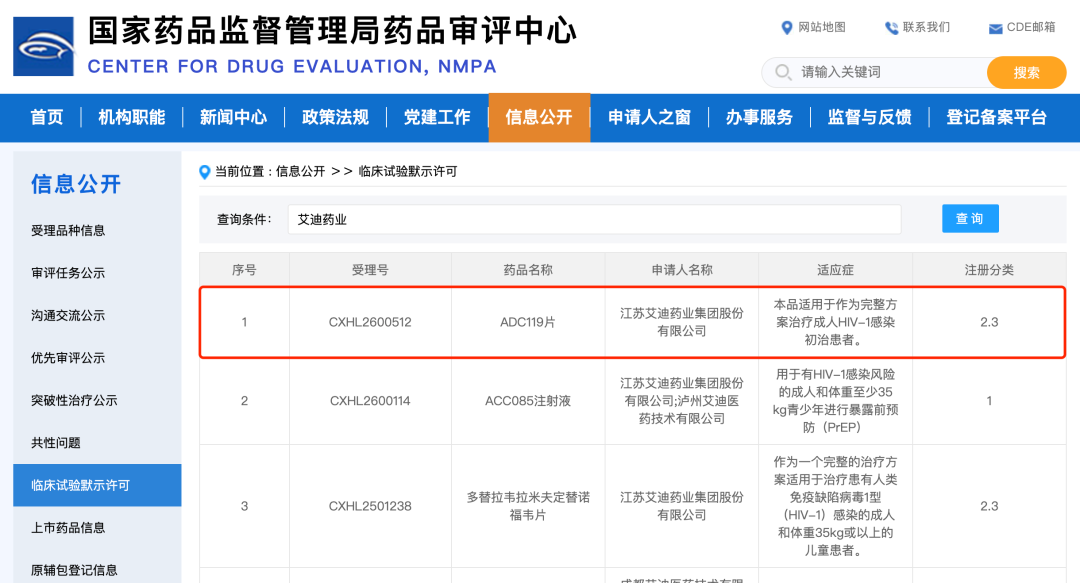
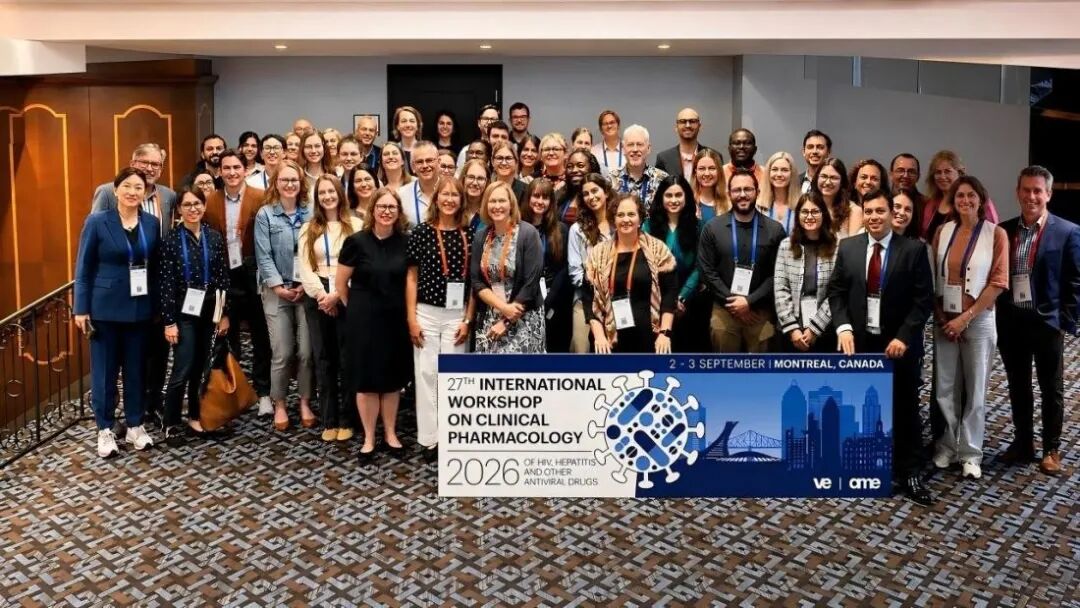
Recently, the 27th International Workshop on Clinical Pharmacology of HIV, Hepatitis and Other Antiviral Drugs was held in Montreal, Canada. Aidea Pharma (688488.SH) presented two research studies in oral sessions at the meeting: a drug–drug interaction (DDI) study of ACC007 and rifampicin, focusing on antiretroviral drug interactions and treatment optimization in patients with co-infection; and a translational prediction study of ACC085 based on nonclinical data, which used modeling to evaluate the potential of ACC085 as a long-acting anti-HIV agent. Dr. Liqin Sun of Shenzhen Third People’s Hospital and Dr. Hong Qin, Chief Medical Officer of Aidea Pharma, delivered the respective presentations.
The symposium is recognized as one of the highly specialized and authoritative international scientific meetings in the field of clinical pharmacology of antiviral drugs. It brings together international experts to exchange perspectives on cutting-edge topics related to antiviral drugs, including drug–drug interactions, model-informed drug development (MIDD), and individualized therapy.
Oral Presentation 1:
PBPK Model-Based Dosing Recommendations for Ainuovirine (ANV) in Patients with HIV or HIV/Tuberculosis Co-infection
— Accounting for Enzyme Autoinduction and Drug–Drug Interactions [1]
Patients receiving concomitant antiretroviral and anti-tuberculosis therapies may be exposed to complex drug–drug interaction risks during treatment. Ainuovirine (ANV) is metabolized predominantly by CYP2C19, while commonly used anti-tuberculosis agents can substantially modulate the activity of this enzyme. Rifampicin is a strong CYP2C19 inducer, whereas isoniazid is a moderate CYP2C19 inhibitor. By modulating CYP2C19 activity in different directions, these agents may alter the in vivo metabolism of ANV, thereby introducing uncertainty into the optimal dosing regimen for patients receiving concomitant treatment.
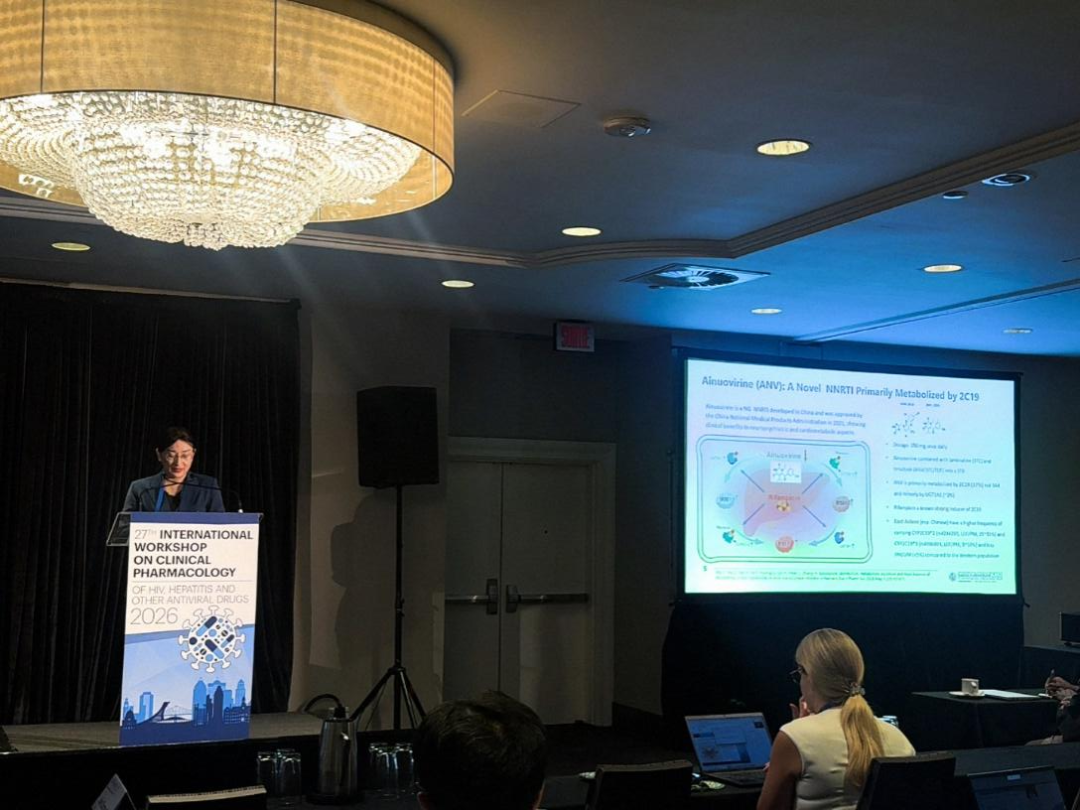
Dr. Liqin Sun presented the study at the symposium.
The research team developed a PBPK model of ANV incorporating CYP2C19 - mediated metabolism using PK-Sim® 12. The model was validated using data from healthy volunteers and individuals living with HIV, and was subsequently used to simulate the concomitant administration of ANV with rifampicin and isoniazid.
The results indicated that the standard ANV regimen of 150 mg once daily may not be fully applicable when ANV is administered concomitantly with rifampicin and isoniazid, and that twice-daily dosing may be required. Specifically, a dose of 75 mg twice daily was recommended when ANV was administered in combination with rifampicin and isoniazid, whereas the dose remained 150 mg once daily when ANV was administered alone.
By focusing on antiretroviral drug interactions and treatment optimization in patients with HIV/tuberculosis co-infection, this study provides model-informed support for dose adjustment in this patient population and may help mitigate the risks of treatment failure or adverse events associated with clinically relevant drug–drug interactions.
ACC085: A Novel HIV-1 Capsid Function Inhibitor
— PBPK Model-Based Prediction of Human Pharmacokinetics from Nonclinical Data Supports Its Long-Acting Potential [2]
ACC085 Injection is a novel HIV-1 capsid inhibitor currently being developed for HIV pre-exposure prophylaxis (PrEP). Previous pharmacokinetic studies in rats and dogs demonstrated relatively slow absorption and elimination following subcutaneous administration of ACC085, indicating its potential for development as a long-acting formulation.
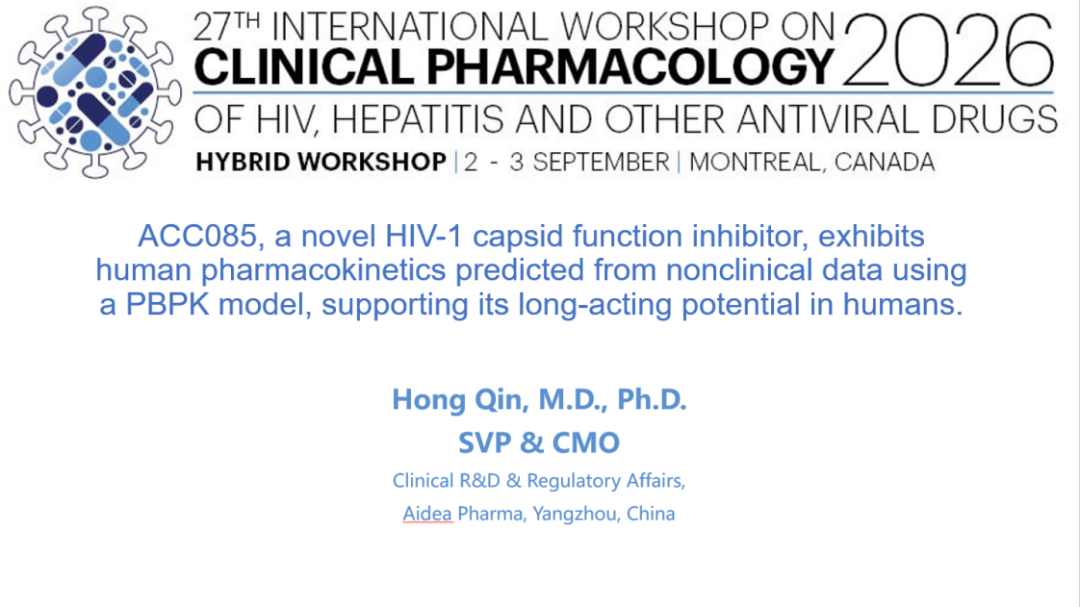
Dr. Hong Qin delivered the presentation online.
The research team developed a PBPK model for ACC085 using PK-Sim® 12. The model was validated against observed pharmacokinetic data from previous animal studies, including intravenous administration at 1 mg/kg and subcutaneous administration at 10, 30, and 100 mg/kg in rats and dogs. The model-predicted plasma drug concentration–time profiles showed a high degree of concordance with the observed data. Based on these findings, the model assumed a human subcutaneous absorption half-life of 800 hours, approximately twice that in the nonclinical species, to simulate the potentially slower drug-release behavior that may occur in humans.
The model predicted that, following a single subcutaneous administration of the proposed clinical dose of 972 mg ACC085, plasma drug concentrations could remain above four times the PA-EC95 for up to six months (PA-IQ95 > 4), supporting the feasibility of a long-acting PrEP regimen administered once every six months.
ACC085 Injection is currently the only domestically developed long-acting HIV capsid inhibitor in China reported to have entered Phase I clinical development for HIV PrEP. The data further support the long-acting preventive potential of ACC085 and provide a model-based basis for dose selection and clinical regimen design in subsequent clinical studies.
From ACC017’s presentation at the previous symposium to the presentations of ACC007 and ACC085 at this year’s meeting, Aidea Pharma’s demonstrates its integrated capabilities in HIV drug development, spanning target discovery, clinical development, and commercial translation. It also reflects the company’s long-term commitment to addressing unmet clinical needs, advancing independent innovation, and contributing to global public health.
Looking ahead, Aidea Pharma will continue to strengthen collaboration with international academic organizations, research institutions, and industry partners, with the aim of advancing the global development of innovative HIV therapeutics originating from China and contributing Chinese research and innovation to the global effort to “end the HIV/AIDS epidemic”.
References:
[1] PBPK Modeling to Recommend Ainuovirine Dosing in HIV and HIV TB Co infected Patients: Leveraging Enzyme Auto Induction and Drug Interactions.
[2] ACC085, A Novel HIV-1 Capsid Function Inhibitor, Exhibits Human Pharmacokinetics Predicted from Nonclinical Data Using a PBPK Model, Supporting its Long-ActingPotential in Humans.
Source:The 27th InternationalWorkshopon Clinical Pharmacology of HIV, Hepatitis and Other Antiviral Drugs